Culinary Traditions
Savoring 2,500 years of Persian-Jewish culinary heritage - where ancient spice routes meet kosher kitchens, creating unique flavors that tell the story of two intertwined cultures
Years of Culinary Heritage
The signature Shabbat dish of Iran's Jews
The gold of Persian-Jewish cooking
Culinary Heritage Streams
Four distinctive culinary traditions that showcase the beautiful fusion of Persian flavors with Jewish dietary laws and celebrations
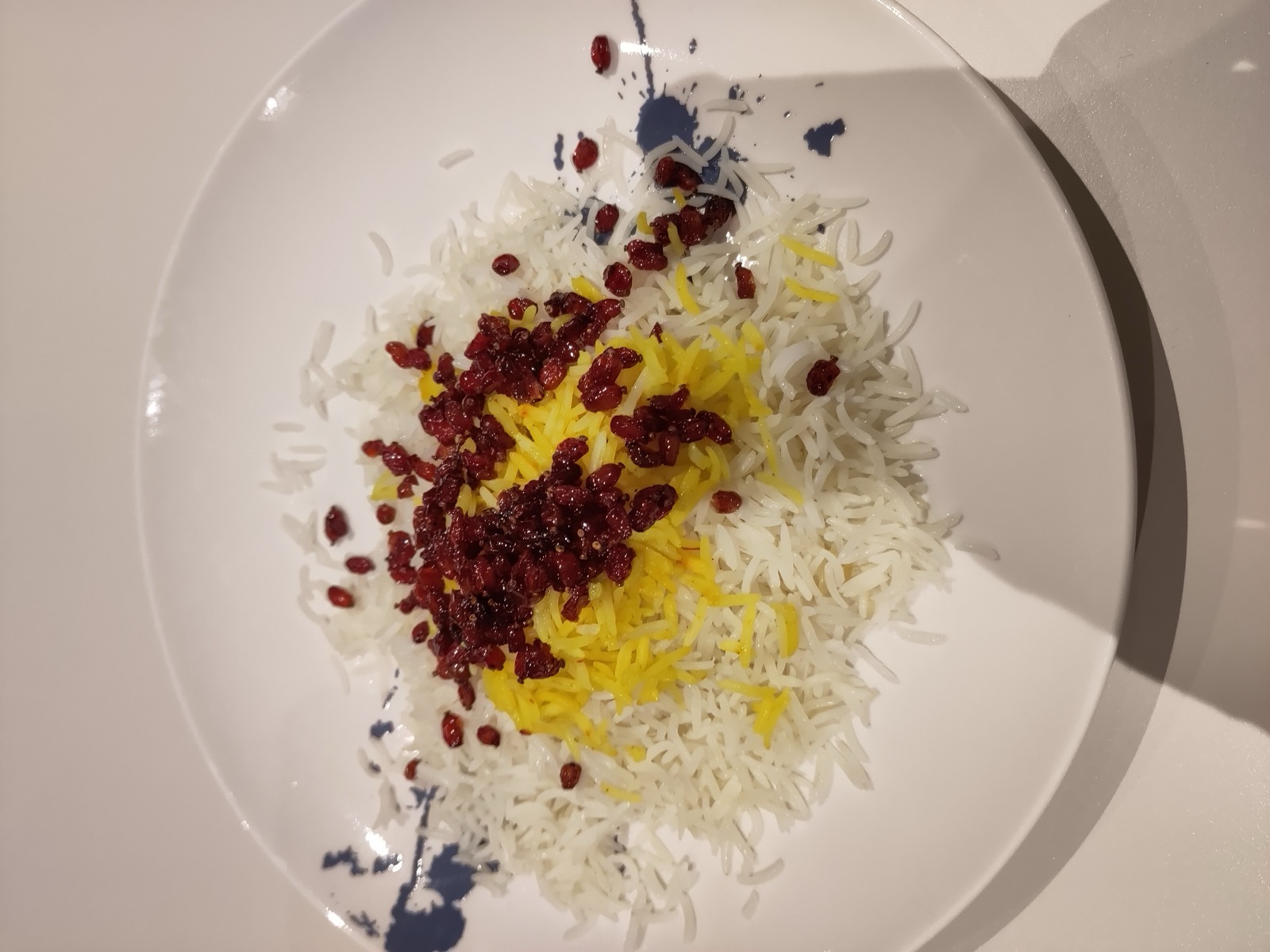
Sabbath & Persian Cuisine
Persian Jews developed unique Sabbath dishes combining kosher laws with Persian flavors, creating a distinctive culinary tradition
- Tahdig (crispy rice) - Persian Sabbath staple
- Khorak-e-Morgh (Persian chicken stew) for Shabbat
- Ghormeh Sabzi adapted for kosher kitchens
- Persian-style challah with cardamom and rosewater
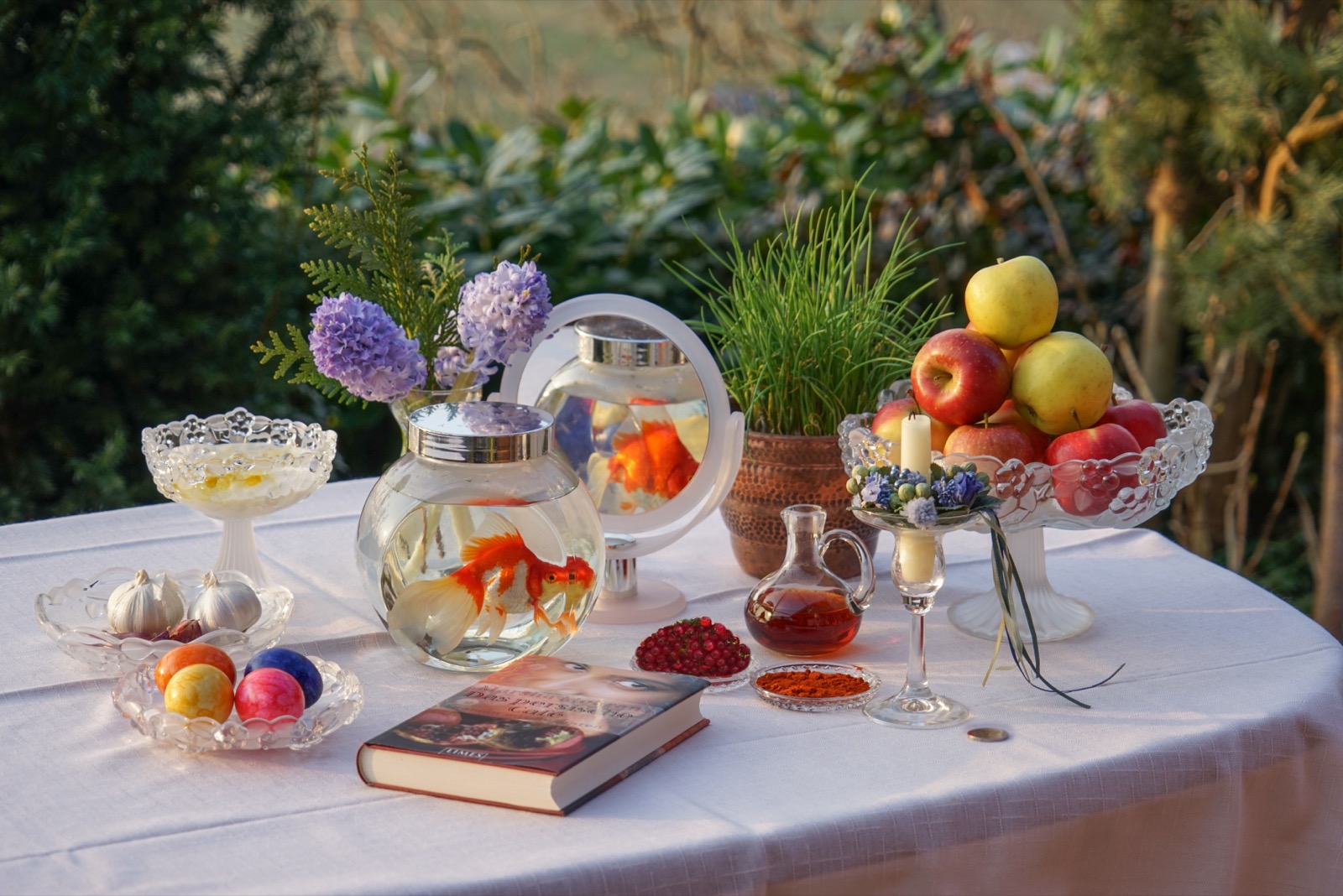
Holiday Fusion Cuisine
Persian-Jewish communities created unique dishes celebrating both Nowruz and Passover, blending ancient traditions
- Charoset with Persian dates and pistachios
- Nowruz herbs (Sabzi Khordan) for Seder table
- Persian-spiced matzah with za'atar and sumac
- Rosewater sweets for both holidays
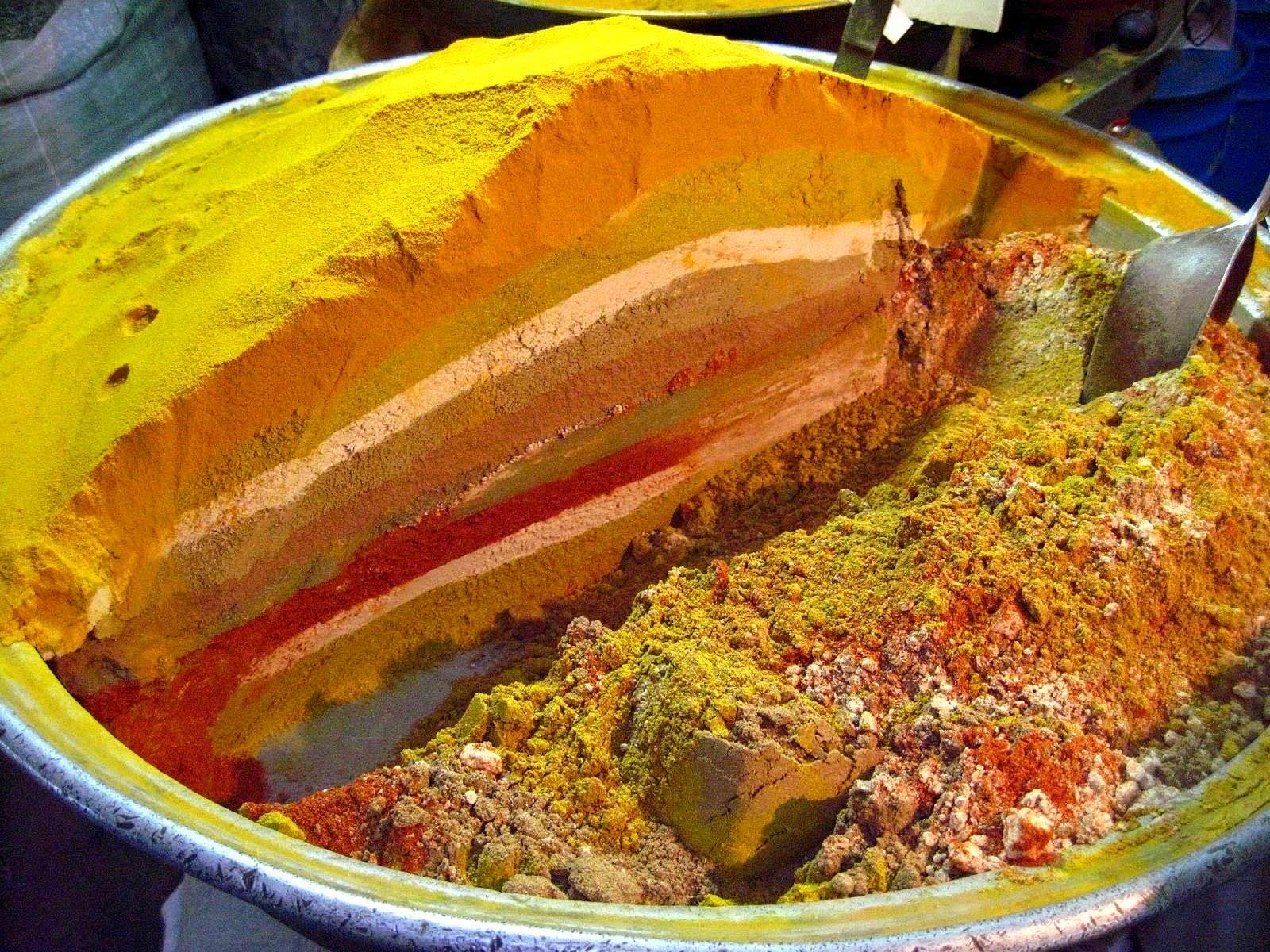
Spice Route Heritage
Jewish merchants along Persian trade routes brought rare spices and cooking techniques, enriching both culinary traditions
- Saffron use in both Persian and Jewish dishes
- Cardamom-infused meat dishes
- Sumac and barberry in traditional recipes
- Za'atar blends adapted from Persian herbs
Modern Fusion Movement
Contemporary chefs worldwide are rediscovering and reimagining Persian-Jewish culinary heritage for modern palates
- Iranian-Jewish cookbooks preserving family recipes in the diaspora
- Shabbat tables from Los Angeles to Tel Aviv keeping gondi alive
- A new generation relearning fesenjan and tahdig from grandparents
- Kosher-Persian kitchens carrying the tradition abroad
Iconic Persian-Jewish Dishes
Signature dishes that represent the unique culinary fusion of Persian ingredients and Jewish traditions
Gondi
The defining Friday-night dish of Iran's Jews. Ground chickpeas and chicken, scented with cardamom and turmeric, are rolled into dumplings and simmered slowly in a golden broth so they stay warm for Shabbat. In the Jewish homes of Tehran and Isfahan, a pot of gondi on the stove means the week is ending and the table is being laid.
In the pot: Chickpea flour · ground chicken · onion · cardamom · turmeric
Cultural Significance: Unique to the Iranian-Jewish community worldwide
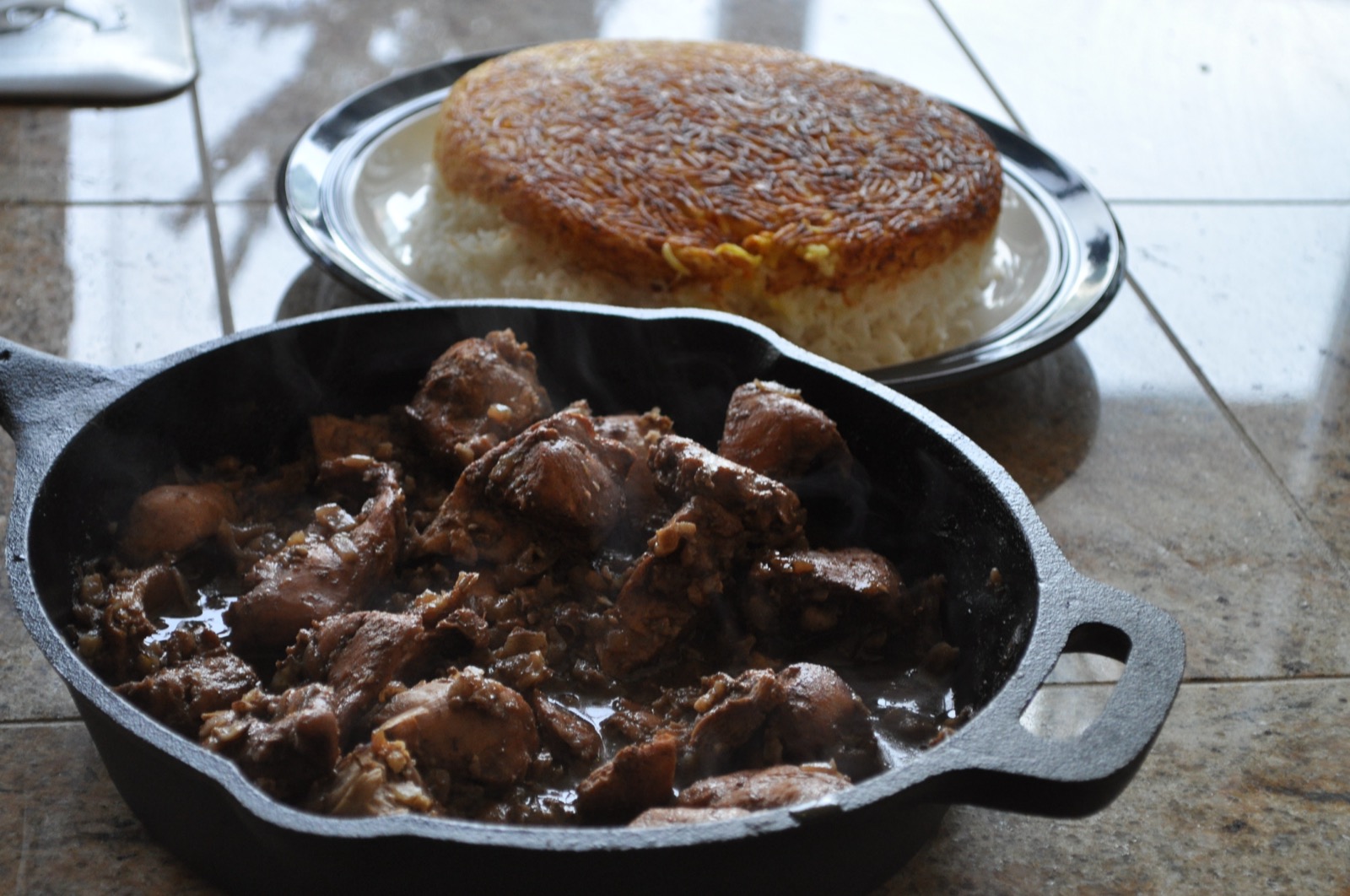
Fesenjan
An ancient Persian khoresh of ground walnuts and pomegranate molasses, cooked low and long until it turns dark and glossy — sour and sweet at once. Persian-Jewish families bring it to the Rosh Hashanah and Shabbat table, where the pomegranate — held in Jewish tradition to carry 613 seeds for the 613 mitzvot — is a wish for a full year.
In the pot: Ground walnuts · pomegranate molasses · poultry (duck or chicken) · onion
Cultural Significance: A symbol of abundance in both cultures
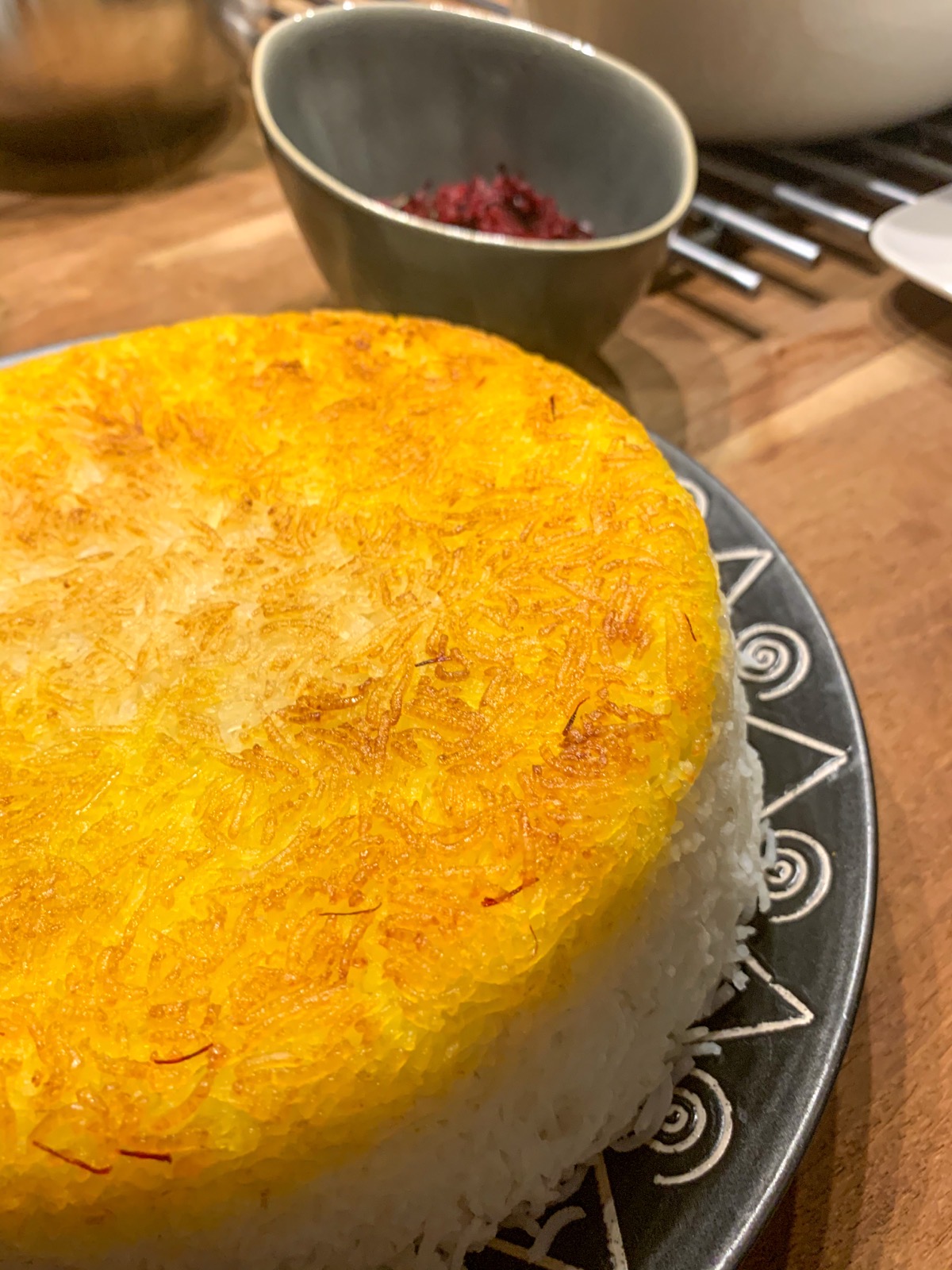
Tahdig
The crackling golden crust at the bottom of the rice pot — the piece everyone reaches for first. Because it forms only over a long, low flame, tahdig belongs naturally to the slow-cooked Shabbat table. Turning the pot out whole, crust upward, is a small performance at any Persian dinner.
In the pot: Basmati rice · yogurt or flatbread · saffron · oil
Cultural Significance: Naturally suited to slow-cooking over Shabbat
Persian Challah
The braided Shabbat loaf, perfumed the Persian way — cardamom and rosewater worked into the dough. It may be the clearest bite of this whole story: a Jewish ritual bread carrying the scent of a Persian garden.
In the pot: Flour · egg · cardamom · rosewater · honey
Cultural Significance: Where Jewish ritual meets Persian aromatics
Traditional Cooking Techniques
Slow Braising
Persian khorak method adapted for Sabbath cooking
Layered Rice
Creating perfect tahdig while keeping food warm
Spice Blending
Balancing Persian aromatics with kosher requirements
Preserve Making
Traditional methods for long-term food storage
From Grandmother's Stove to Today's Table
Today's chefs and food enthusiasts are rediscovering and innovating Persian-Jewish culinary traditions for new generations
Chef Communities
Global networks preserving and innovating recipes
Restaurants Worldwide
Persian-Jewish cuisine gaining international recognition
Family Traditions
Recipes passed down through generations
Preserve Culinary Heritage
Share your family recipes and cooking traditions to help preserve Persian-Jewish culinary heritage for future generations