On a spring morning in 1979, the richest and best-known Jew in Iran stood against a wall. His trial had lasted less than twenty minutes. The tower he built still rose over the capital, its name — Plasco — spelled out in the sky he had helped rebuild. This is the story of the man that name belonged to.
From the Edge of the Pit
He was born Habibollah — "God's beloved" — in Tehran on 5 April 1912, into one of the poorest families of the city's crowded Jewish quarter. The Jewish Journal calls the place sar-e-chal, "the edge of the pit." As a boy he traded second-hand clothes and watches. Nothing in that lane promised the man he would become.
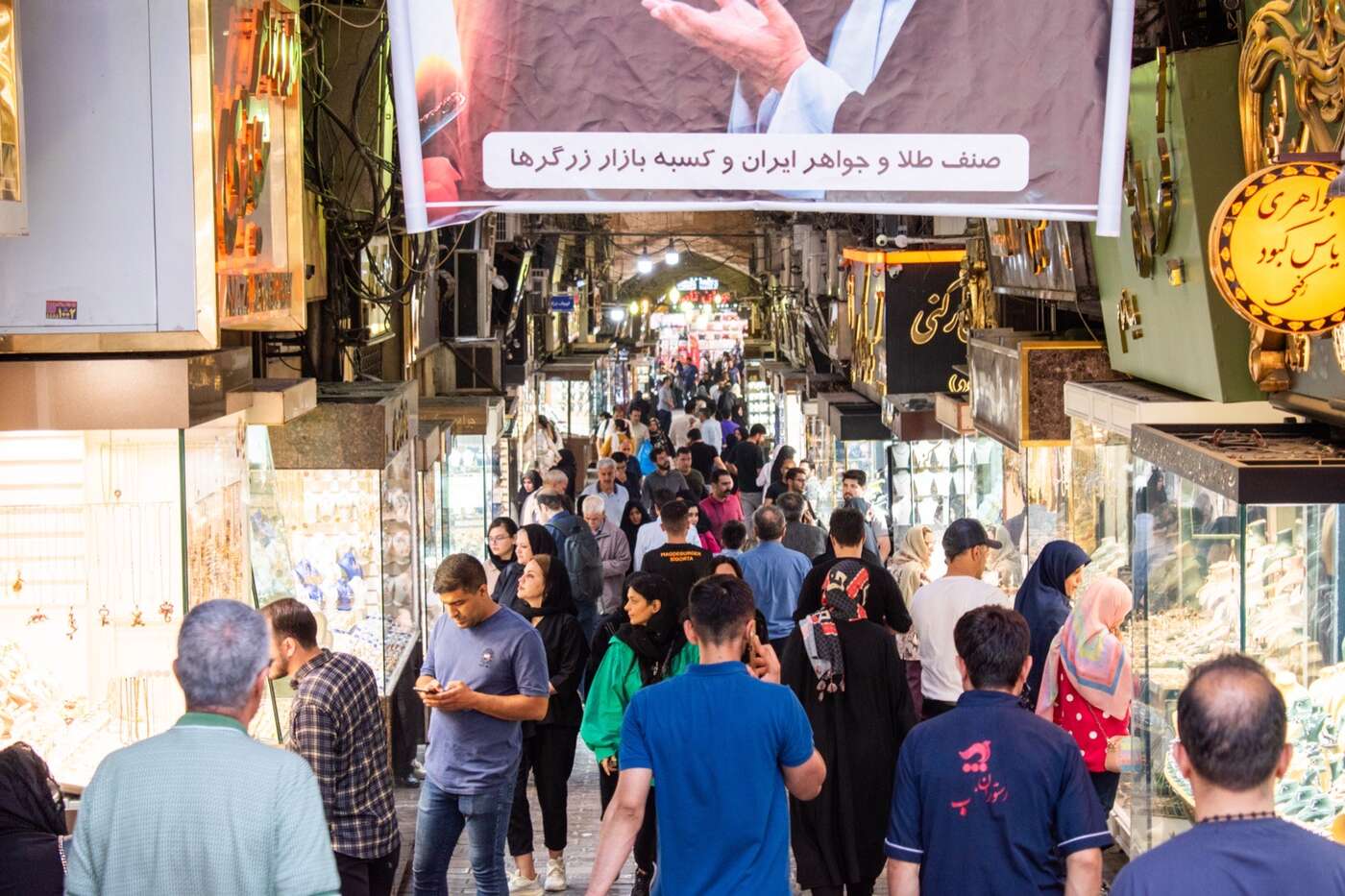
Over four decades he built himself into a self-made industrialist — a pioneer of mining, real estate, construction and aluminium, remembered as the man who brought Western technology to Iran in the 1960s and 1970s. In 1959 he founded Plasco and introduced the modern plastics industry to the country. He was, in the plain sense of the word, a builder.
The Tower Over Tehran
In 1962 he raised the Plasco Building: Iran's first privately built high-rise and, at the time, the tallest building in Tehran. It carried the name of his plastics company like a signature written across the city. For a boy from the edge of the pit to put the tallest tower in the capital was not only commerce — it was a statement that an Iranian Jew belonged at the center of modern Iran, not its margins.
Plasco grew into the largest and most technologically advanced plastics manufacturer in the country; his enterprises stretched into refrigerators, stoves and aluminium. Wealth, for him, was inseparable from giving: he was as known for his philanthropy as for his factories, funding the institutions of a community that trusted him to speak for it.
The Man Who Stayed
From 1959 he led the Tehran Jewish Society, and through the 1970s he was the symbolic head of Iran's roughly 80,000 Jews — a community whose roots in Persia reached back some two and a half thousand years, to the day Cyrus freed their ancestors from Babylon. When revolution came and friends and relatives begged him to leave, he refused. The Jewish Journal records that he called himself "a proud Iranian; Iran was his homeland."
"He stayed there to protect the Jewish community he had led since 1959 and what he had built from scratch."
— Shahrzad Elghanayan, granddaughter · The Times of Israel, January 2022
His name had been marked long before. As early as 1964, in a speech against Iran's modernization, Ruhollah Khomeini — the man who would lead the revolution — had made plain, in his granddaughter's telling, that in the country he intended to rule "there would be no place for a successful Jewish businessman." The warning was fifteen years old when it was finally carried out.
The Arrest
He had come home. On 16 March 1979, weeks after the revolution, Habib Elghanian was seized and accused of spying. He was imprisoned and, his granddaughter has said, tortured. The charges gathered around a single idea — that a Jew who did business with the world was in truth an agent of Israel: "corruption on earth," "contacts with Israel and Zionism," "economic imperialism."
Twenty Minutes
On 8 May 1979 he was brought before a revolutionary court. The whole of it — accusation, verdict, sentence — took less than twenty minutes. In the account handed down through his family he appears small and pleading, an old man asking for his life in a room that had already decided. In the prison morgue afterward, a cardboard sign was propped against his body. It read: "Habib Elghanian, Zionist Spy."
"Khomeini didn't consider my grandfather Iranian. It's that old antisemitic trope of dual allegiances — except that for Khomeini, it wasn't even a dual allegiance. It was an allegiance only to Israel."
— Shahrzad Elghanayan · The Times of Israel, January 2022
She has since given the charge the answer it deserves. The accusation, she says, "is best described in three words: bigoted, nebulous and nonsensical."
Dawn, 9 May 1979
On 9 May 1979 Habib Elghanian was executed by firing squad. He was the first Jewish citizen — and one of the first Iranian civilians — put to death by the new order. He was sixty-seven.
His son learned of it from a shortwave radio in New York. The family had left Iran the previous September; his granddaughter Shahrzad was seven years old. Years later she would describe the morning in a single unbearable image — the black radio "droning on in the cold marble bathroom" while her grandfather's "bullet-riddled body languished in the prison morgue."
"He was alone then, but now his story will live in readers' homes and hearts."
— Shahrzad Elghanayan · The Times of Israel, January 2022
The Long Leaving
The execution was meant as a message, and it was received as one. In the years that followed, roughly three-quarters of the 80,000 Jews who had lived in Iran before the revolution left the country. A community that had endured on Persian soil for some twenty-seven centuries — since before the Second Temple, since Cyrus — thinned in a single generation.
It is important to say this without turning Iranian Jews into mere victims. They did not vanish; they carried Iran with them — to Los Angeles, to New York, to Tel Aviv — its language, its music, its food, its memory of a country that had once been theirs. Habib Elghanian's death did not end that story. It scattered it, and set his granddaughter, decades later, to the work of gathering it back.
When the Tower Fell
The tower outlived the man by thirty-eight years. On 19 January 2017 the Plasco Building caught fire and collapsed in the heart of Tehran, killing around twenty firefighters who had run toward it. The state that executed its builder still spoke his tower's name every day; most who mourned the dead did not know it had been raised by an Iranian Jew shot as a spy. The name survived. The country lost the memory of the man behind it — until his granddaughter set it down in full.
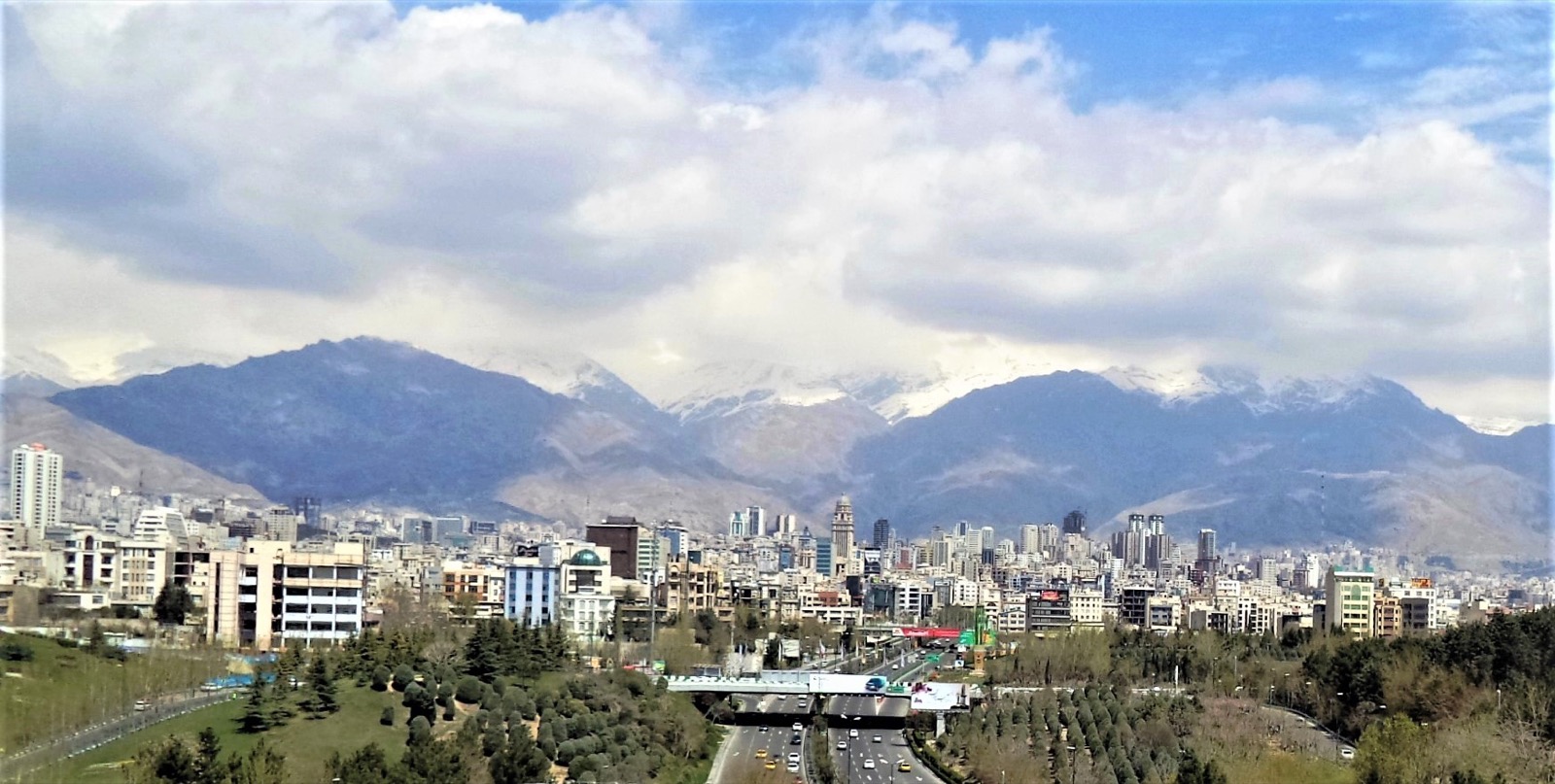
In 2022 Shahrzad Elghanayan — a journalist and photo editor at NBC News — published Titan of Tehran: From Jewish Ghetto to Corporate Colossus to Firing Squad — My Grandfather's Life. It is the fullest account of his life, and the source, along with the reporting that surrounded it, for much of what you have just read.
What His Story Asks of پیمان کوروش
Twenty-five centuries before a revolutionary court called Habib Elghanian a foreigner in his own city, an Iranian king had done the opposite. In 538 BCE Cyrus the Great freed the Jews of Babylon and sent them home to rebuild their temple. Iran was the first liberator; the debt between these two peoples runs in that direction first. Elghanian lived the whole arc of it — a Jew who was fully Iranian, who built for Iran, and whom an unfree Iran destroyed.
This is what his story asks of a future پیمان کوروش — the Cyrus Accords: not that Israel rescue Iran, and not that Iran be forgiven, but that the two peoples finish what Cyrus began. A free Iran does not need to be saved. It needs to be able to keep its own — to be a country where an Iranian Jew can once again raise a tower over Tehran, put his name on it, and call the city home without a firing squad waiting at the end of the sentence.
That is the Iran the democratic movement led by Prince Reza Pahlavi speaks of when it speaks of return: not a favor granted from outside, but a homeland an Iranian Jew was told, at gunpoint, was never his. Naming Habib Elghanian is the smallest part of giving it back.
He was a builder. Remembering him is a way of building too.
Sources
The reporting and the biography this account draws on:
- The Times of Israel — "An Iranian Jewish leader was executed in 1979. His granddaughter tells his story" (January 2022)
- Jewish Journal — "The Jewish 'Titan of Tehran' Whose Murder Still Haunts Iran Today"
- Jewish Telegraphic Agency (JTA) — "An Iranian Jewish leader was executed in 1979. His granddaughter wants his story known" (4 January 2022)
- Kayhan Life — "Jewish-Iranian Industrialist Habib Elghanian Is Remembered in Granddaughter's Book: Interview"
- Wikipedia — "Habib Elghanian" (born 5 April 1912; arrested 16 March 1979; tried 8 May; executed 9 May 1979)
- Wikipedia — "Plasco Building" (built 1962; collapsed after fire, 19 January 2017)
- NBC News — "Tehran's Iconic Plasco Building Collapses After Fire" (19 January 2017)
- Shahrzad Elghanayan, Titan of Tehran: From Jewish Ghetto to Corporate Colossus to Firing Squad — My Grandfather's Life (2022).