Roya Hakakian was born in Tehran in 1966, into one of the oldest communities of Iran: the Jews of Iran, whose roots reach back to Cyrus. She was a child when the 1979 revolution swept through her city. Years later, in America, she wrote those days down — not as history, but as a girlhood.
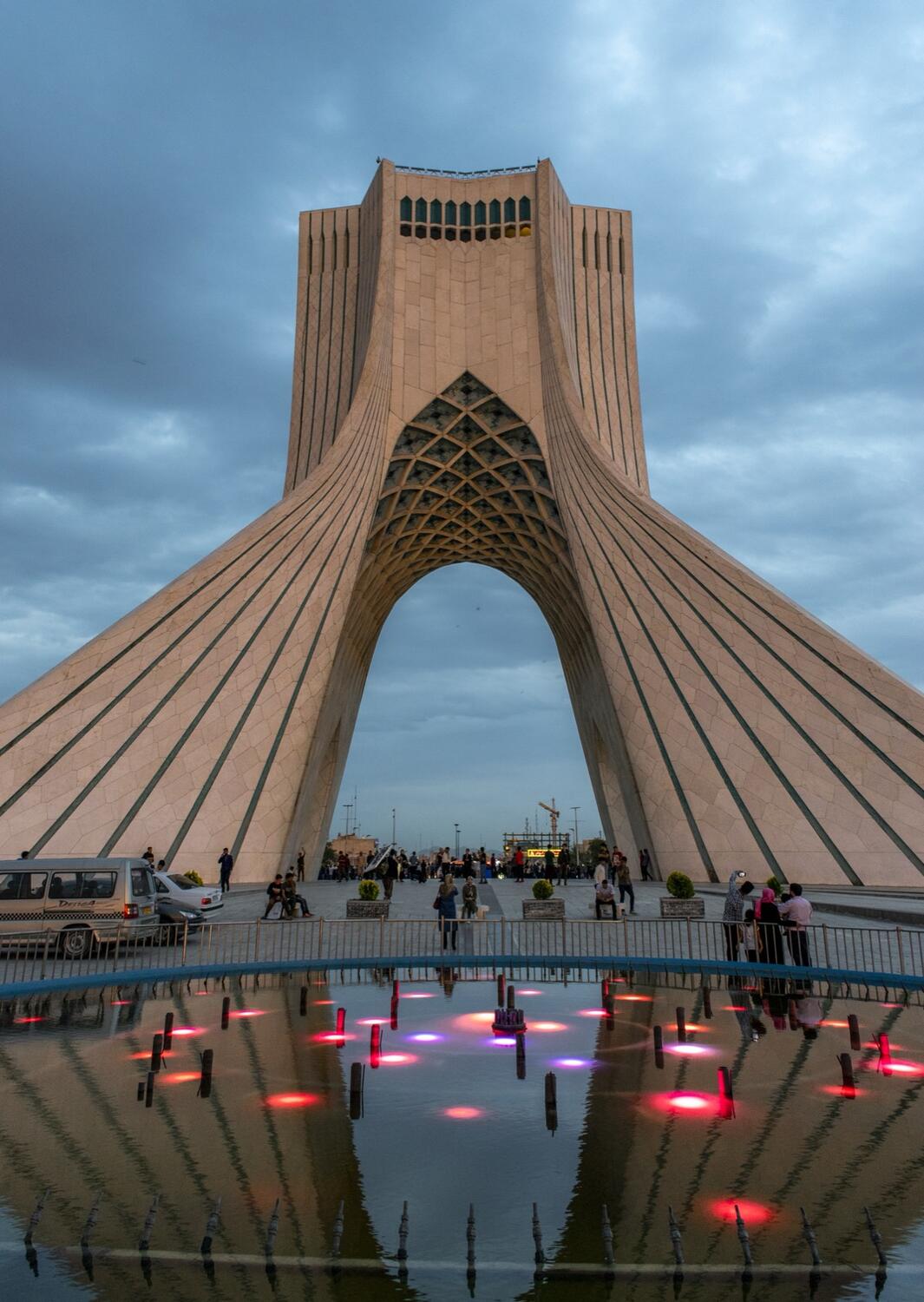
A House Full of Poetry
By her publisher's account, Hakakian grew up in a home “that hummed with intellectual life.” She was the daughter of an esteemed poet; family gatherings were “punctuated by witty, satirical exchanges and spontaneous recitations of poetry.”
Her family belonged to the very small Jewish population of Iran — a people who had lived in this land for more than two millennia, and who now watched, from inside, as the grip of the new fundamentalism began to tighten.
The Revolution at the Door
She was twelve in 1979. When the revolution came, the world of a Jewish girl in Tehran changed quickly.
In her memoir she recorded those years in exact, bruising detail — among them the swastika she found painted on a wall near her home, which she described in a single unforgettable image.
A plus sign gone awry, a dark reptile with four hungry claws.
Written in the Language of Exile
Hakakian came to the United States in May 1985 on political asylum. In New York she studied psychology, and poetry under Allen Ginsberg.
In 2004 she published “Journey from the Land of No: A Girlhood Caught in Revolutionary Iran” (Crown) — a memoir met with wide acclaim. She went on to write “Assassins of the Turquoise Palace” (Grove/Atlantic, 2011), on the assassination of exiled Iranian-Kurdish leaders at Berlin's Mykonos restaurant, and “A Beginner's Guide to America” (Knopf, 2021).
An immensely moving, extraordinarily eloquent, and passionate memoir.
The One Who Won't Let It Be Forgotten
Hakakian is a founding member of the Iran Human Rights Documentation Center — an institution whose work is to record precisely what the Islamic Republic wishes to erase.
Her life's work, in memoir and in journalism alike, is a single task: not to let the memory die.
The 2,500-Year Thread
The Jews of Iran are not a footnote to its history; they are part of Iran itself. Cyrus freed them in 538 BCE — Iran was the original liberator.
Roya Hakakian carried that thread out of Tehran and into the present. The Cyrus Accords (پیمان کوروش) would complete a 2,500-year mutual debt — and the voice of a daughter like her reminds us that this bridge, before any document, was always made of people.